
Resources > Gen Z Attitudes > 2026 Voices of Gen Z Study

2026 Voices of Gen Z Study

Gen Z students feel optimistic about their future, but that confidence doesn’t always carry into adulthood. The latest edition of the Voices of Gen Z study provides insight into Gen Z’s wellbeing, attitudes, and transition into adulthood.
August 26, 2026
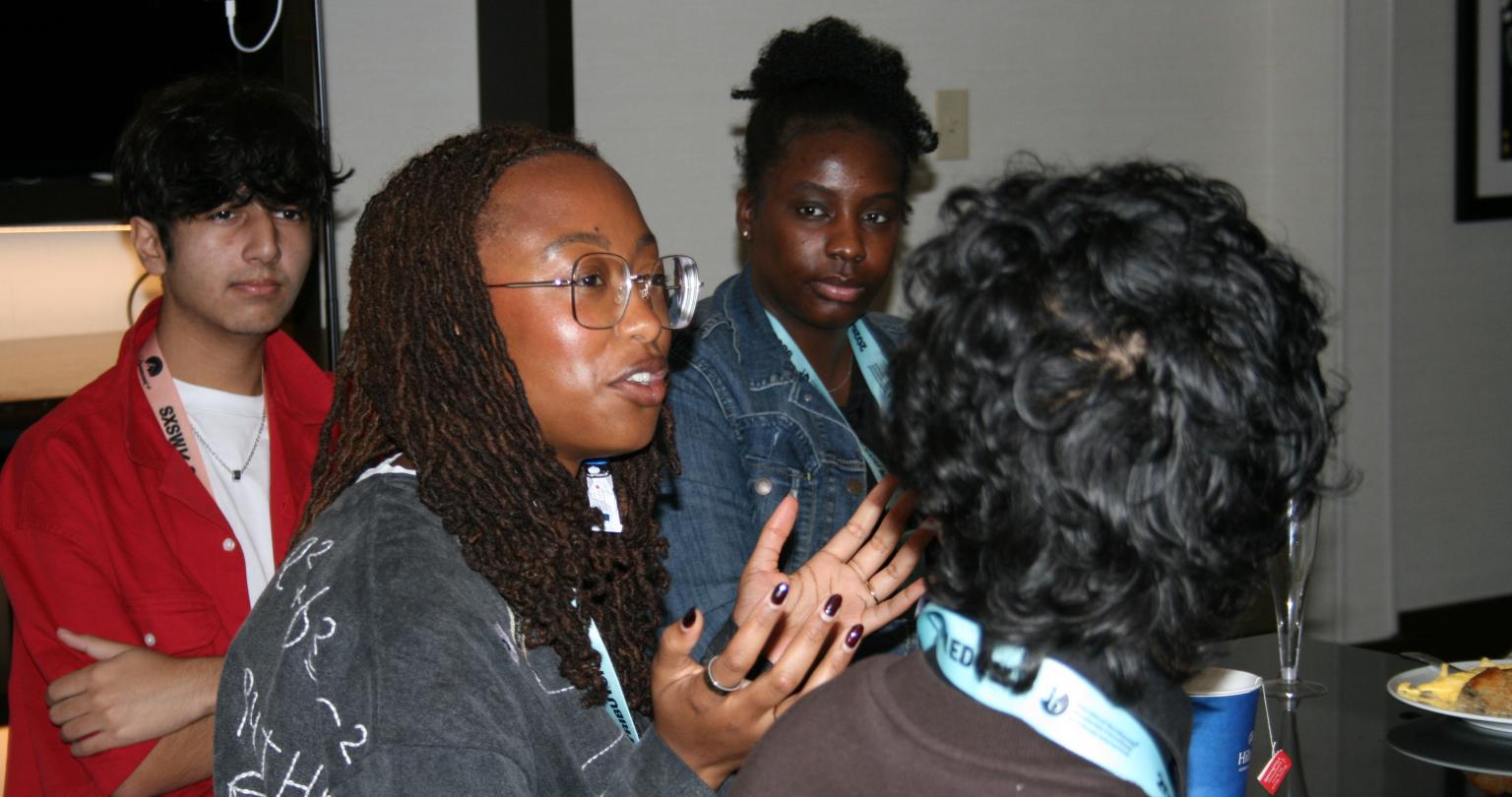
Three students learning together

Understanding the perspectives of Gen Z students’ and young adults is essential to creating the conditions that help them reach their fullest potential. Now in its fourth year, the 2026 Voices of Gen Z study, released by the Walton Family Foundation in partnership with Gallup, explores how Gen Z experiences education, prepares for their careers, and navigates the transition to adulthood.

As one of the nation’s most comprehensive examinations of Gen Z’s experiences, attitudes, and aspirations, the survey provides insights into the opportunities and challenges shaping this generation, informing decisions that support their success.
The Big Picture

Gen Z  students continue to express strong confidence in their futures. Yet that optimism masks important differences in how prepared and mentally well young people feel as they transition into adulthood. The latest Voices of Gen Z study highlights gaps between students and adults, lower- and higher-income Gen Zers, and those with and without college degrees. The findings underscore the importance of meaningful learning experiences and supportive relationships in helping young people feel connected, engaged, and prepared for what comes next.


Chapter 1

55% of Gen Z students feel like they are thriving, but only 38% of Gen Z adults feel the same. 


80% of Gen Z students believe that they have a bright future ahead of them, and 82% rate their emotional well-being as either “good” or “excellent.” At the same time, young adults ages 19-22 continue to experience a decline in overall well-being. Nearly 4 in 10 Gen Zers above the age of 19 report struggling with their mental health. These results indicate that while Gen Z students feel ready and optimistic about their futures, the transition to adulthood presents new challenges that can significantly affect their well-being. 

Chapter 2

Gen Z students feel more prepared for life after school than ever before, but that confidence is not shared equally.

  • 60% of Gen Z K-12 students feel prepared for the future, compared with 51% of Gen Z adults. 
  • Among students, preparedness varies by post-high school plans, with those not planning to pursue a degree reporting a 10-point decline in preparedness. For Gen Z adults, the gap grows wider, with only 35% of Gen Z adults with a high school diploma or less feeling prepared for the future. 

Chapter 3

Students feel the most engaged when learning feels meaningful and prefer learning experiences that are flexible, practical, and personalized. 

  • Students are most responsive to self-paced learning and short-term, in-class projects, while fewer than 3 in 10 enjoy semester-long projects.
  • Most students prefer incremental assessments over a single high-stakes exam.
  • Students are equally split on whether they prefer in-class learning from a teacher’s lecture or working on interactive assignments after a teacher’s lessons.

Chapter 4

Students named class sizes, mental health challenges, and external commitments as key barriers to their learning.  


  • While there has been a 14-point increase since 2023 (40% to 54%) in Gen Z students saying school lets them do what they do best every day, almost half of students still disagree. 
  • Nearly half of students say large class sizes make it difficult to learn, while a similar share say homework and studying make it harder to succeed. 
  • 1 in 3 students also report missing school because of mental health or related challenges. 

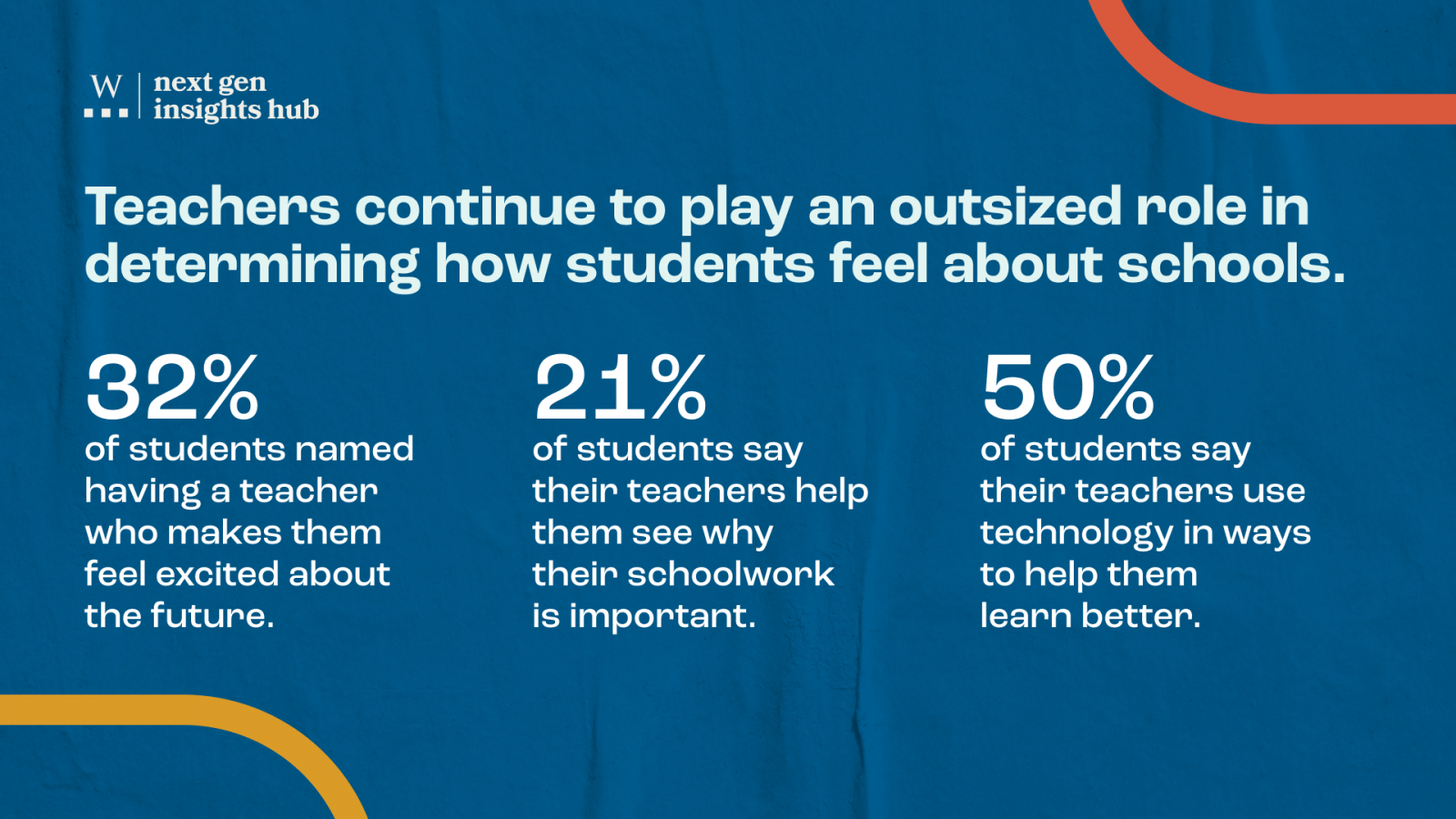
At the same time, teachers remain a critical influence on how connected, supported, and motivated students feel in the classroom.


Chapter 5

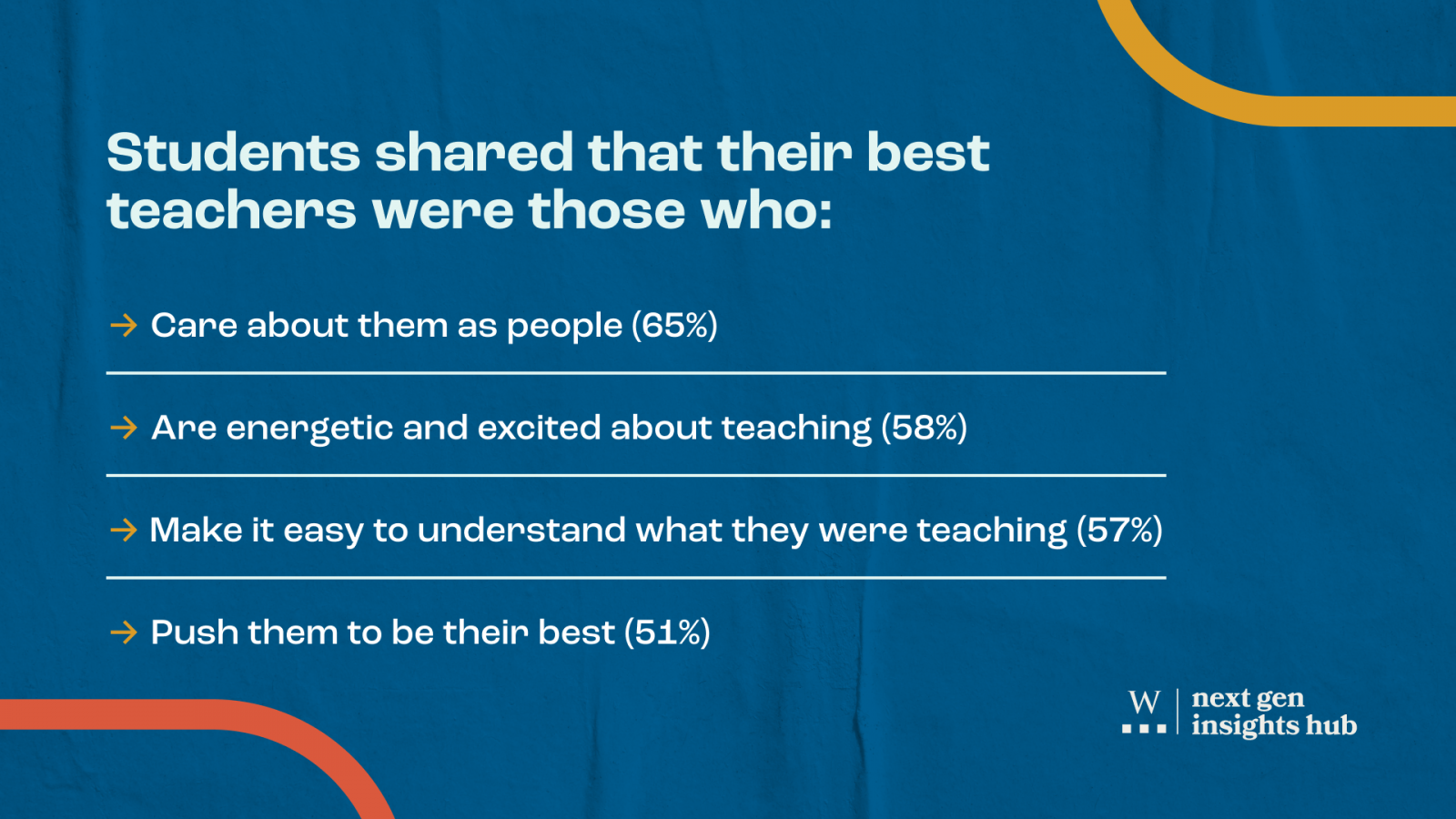
Supportive adults and teachers who build meaningful relationships help students feel a sense of belonging in school. 


  • About 1 in 3 students say they do not feel like they belong at school or are comfortable asking questions in class.
  • Most students agree they have supportive adults at school who encourage them to pursue their goals (79%), check in on how they are doing (71%), and recognize their talents and interests (70%). 
  • Two-thirds of students said that most of their teachers care whether they succeed. 

Chapter 6

Students want to explore different options for their future, but schools and teachers continue to provide stronger support for college than non-college postsecondary pathways.

​​

  • Most students plan to pursue some form of postsecondary education or training after high school, while 14% plan to enter the workforce immediately. 
  • About 6 in 10 students say someone talks to them about their future after graduation at least monthly, but these conversations remain heavily focused on college. 
  • Only about 2 in 10 of students who don’t plan to go to college say adults have talked with them “a lot” about non-college pathways.

The Takeaway

While many Gen Z students feel optimistic and prepared, gaps in opportunity, belonging, and support continue to shape how young people experience school and transition into adulthood. The results show that meaningful connections with adults at school make a difference in how students show up and how prepared they feel for the rest of their lives.