

Resources > Schools & Curriculum > Guiding Gen Z Through The Age of AI

Guiding Gen Z Through The Age of AI

What does AI actually mean to the generation growing up with it? A new survey focused on Gen Z’s relationship with AI finds a generation that is engaged, increasingly anxious, and looking to schools for guidance.
April 9, 2026

For Gen Z, AI is not just a tool. It’s actively defining their future and shaping how they learn, work, and make decisions. To understand how young people are navigating that reality, the Walton Family Foundation partnered with Gallup to survey over a thousand Gen Z students and young adults across the nation.

THE BIG PICTURE: Understanding how to use AI is no longer optional for Gen Z, both in school and in the workforce. More than half use it regularly, often as a first stop for finding information, and at least four in ten also use it for writing, brainstorming, and decision-making. But routine use has not translated into confidence. What the survey findings reveal is a generation that is curious and cautious in equal measure, and one that is asking for thoughtful policies and guidance to help them responsibly navigate what comes next.
Gen Z still strongly believes AI has a place in schools, but their feelings on AI as a whole have grown more complex.

  • The broad support is clear, 78% say AI should be allowed in the classroom, and just 22% think it should be completely prohibited.
  • Just over half (51%) use AI daily or weekly, up four points from last year. Nearly half say AI makes them feel “curious.”
  • Yet beneath that steady usage, sentiment around AI has shifted. 
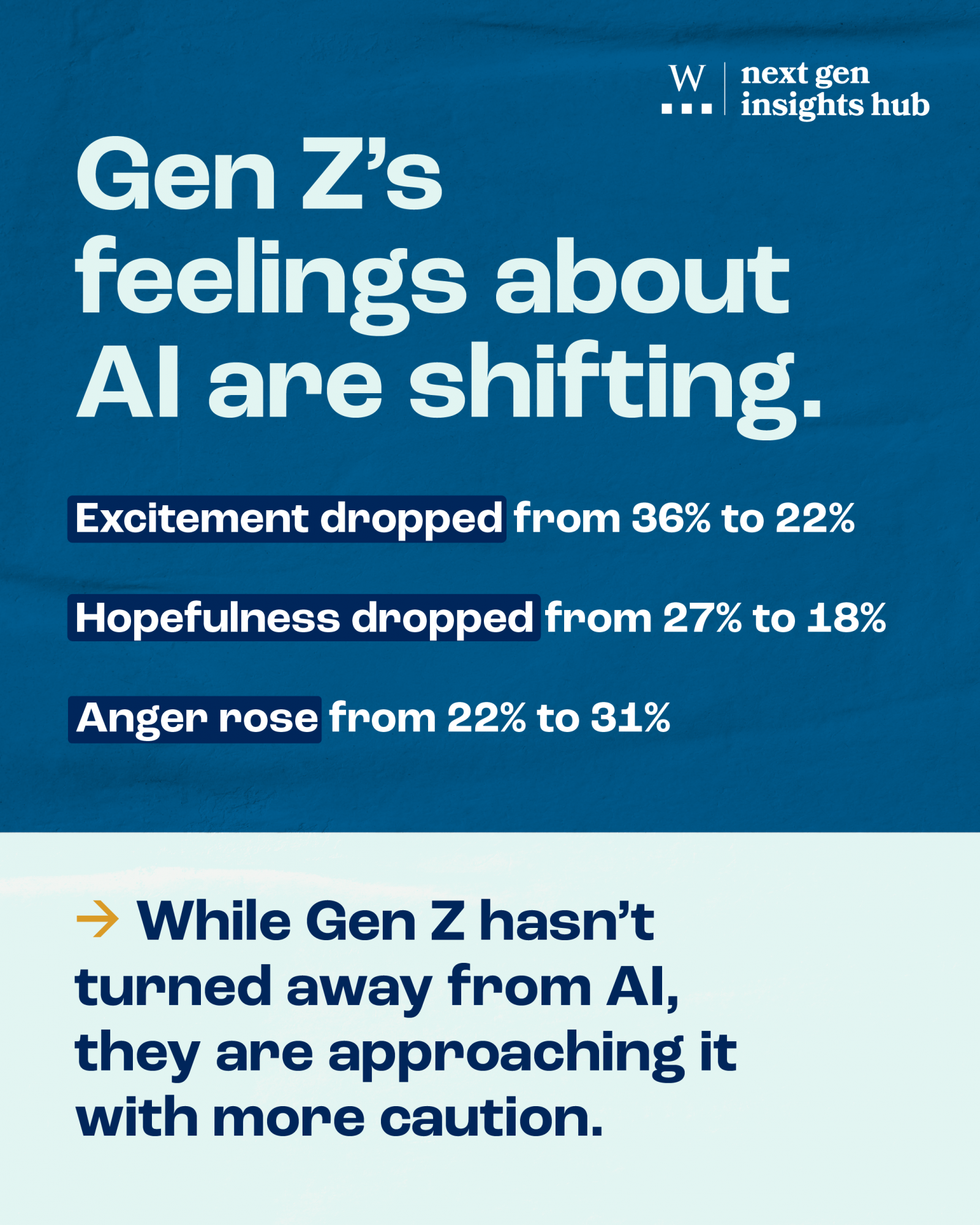
Gen Z's feelings about AI are shifting. Excitement dropped from 36% to 22% Hopefulness dropped from 27% to 18% Anger rose from 22% to 31% While Gen Z hasn't turned away from AI, they are approaching it with more caution.
AI is both a blessing and a curse. I feel like it should be used as a tool to assist, not replace, because a lot of people right now are worried that AI might take over jobs. Personally, I believe AI should be used as a tool to assist because it has a lot of really useful capabilities.
Sachchit
Texas, High School Student

Gen Z sees AI’s potential to shape their futures, but they remain hesitant about what that means.

  • Among K-12 students, 52% believe they will need to know how to use AI in postsecondary education, and nearly as many say the same about their future careers. They expect it to show up in college and in their careers, and they know that understanding how to use it will matter. 
  • At the same time, skepticism is growing. Among Gen Z workers, 48% now believe AI’s risks outweigh its benefits—up from 36% just a year ago — while only 15% see it as a net positive. Rather than viewing AI as a straightforward advantage, they are beginning to question what it might replace or disrupt.
  • Optimism hasn’t disappeared entirely. Between 45% and 56% of Gen Z believe AI can help them learn and work faster. But they’re holding that hope alongside real concern.
Let’s figure out how to make sure students still get the education they need, while also knowing they’re going to use AI—and being okay with that, and figuring out how to use it in a helpful way. I think we’re in a really interesting space to navigate this, and a lot of it starts with education, because that’s going to shape how our generation enters the workforce and how we understand and use AI
Hayden
Houston, College Student

Gen Z is asking schools for guidance that will help them use it well. And schools are beginning to respond.

Still, gaps remain:

  • 41% of students believe most of their classmates use AI for schoolwork when they’re not supposed to.
  • 19% of students still aren’t sure whether their school has any policy at all. 

GO DEEPER: Explore 2025 data to see how Gen Z’s sentiment about AI has shifted.


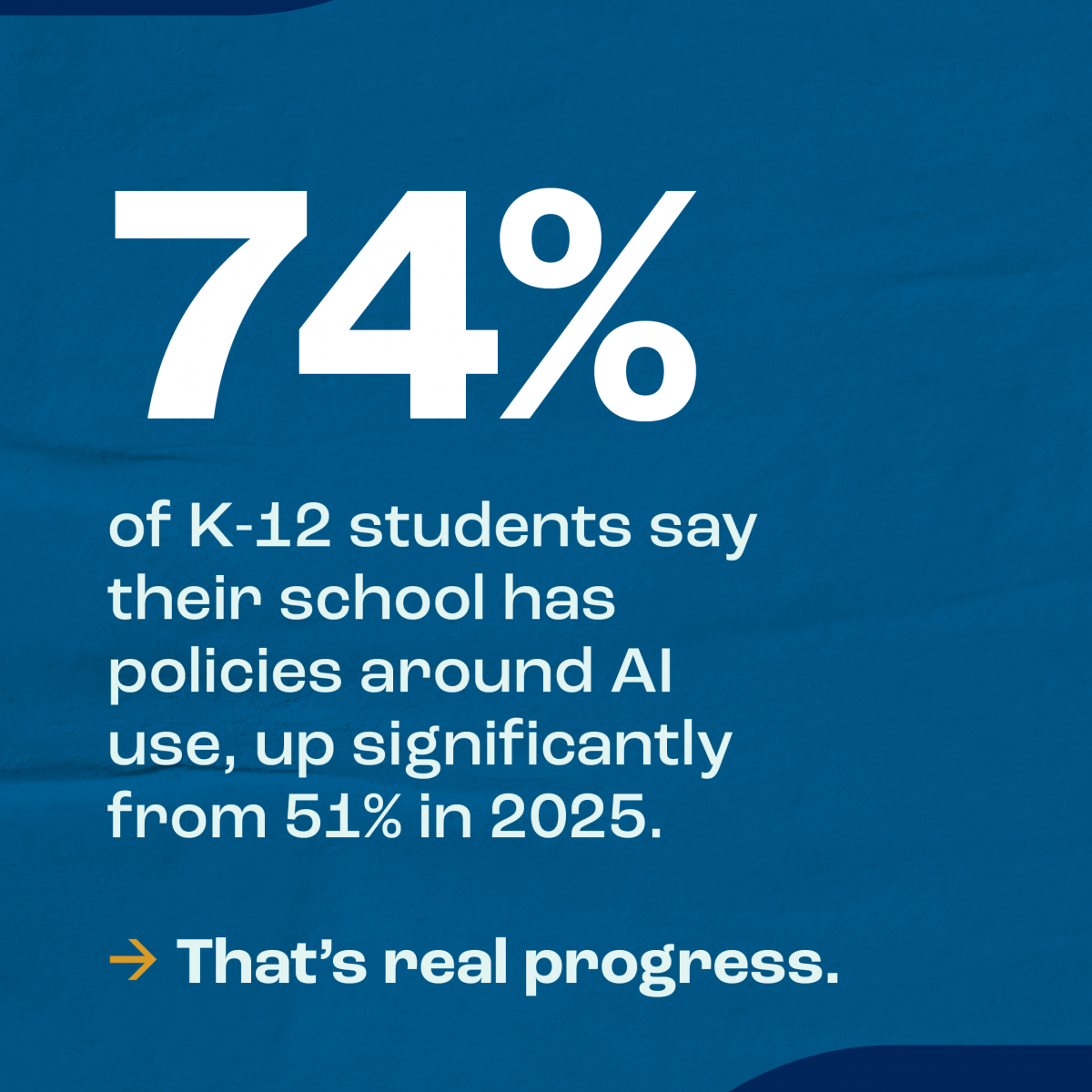
74% of K-12 students say their school has policies around AI use, up significantly from 51% in 2025. That's real progress.

THE TAKEAWAY: Gen Z is looking for support in navigating AI. Between 45% and 56% believe AI can help them learn and work faster, yet 8 in 10 also worry it may come at a cost to how deeply they learn. That tension is exactly where schools and policymakers can make a difference by setting clear guardrails and building AI literacy into how the next generation learns and prepares for careers. Done well, that means students who engage with AI not from a place of anxiety, but from a place of confidence and skill.